
The goal differs
Avoiding all alcohol, reducing heavy-drinking days, preventing opioid relapse, and staying in treatment are not the same outcome.
The mechanism in plain language
Naltrexone occupies opioid receptors without switching them on. That one action has two different treatment uses: changing part of alcohol's reward response and blocking opioid effects after withdrawal.
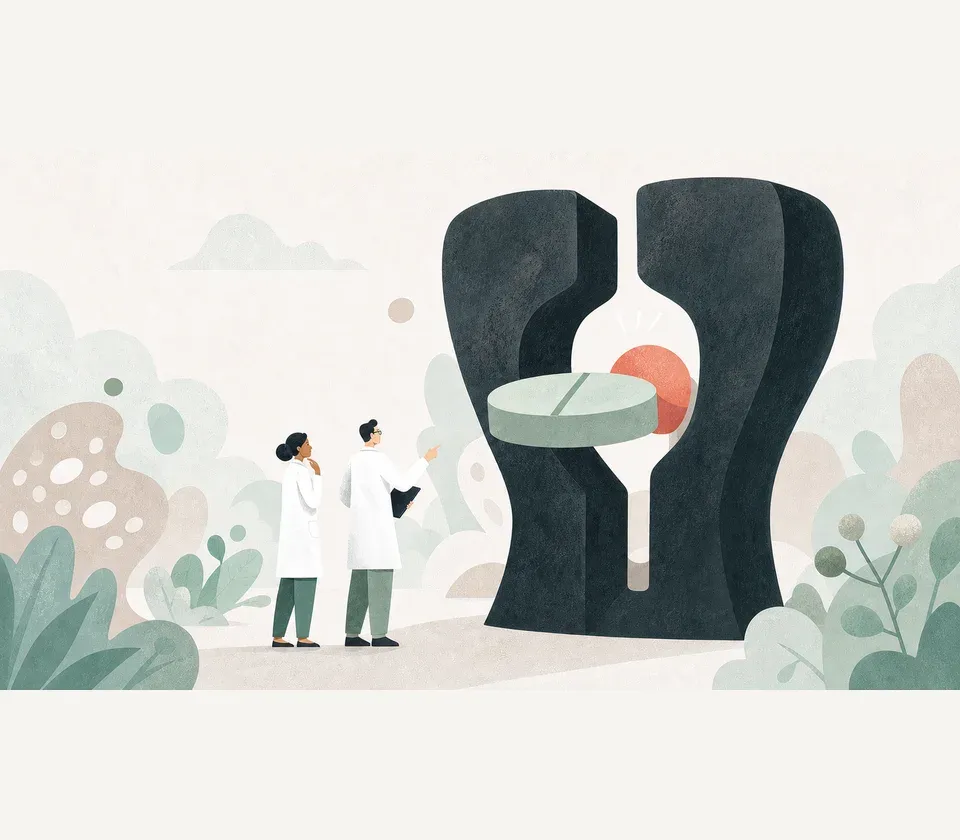
Opioids and some of the body's own signalling chemicals normally bind to opioid receptors. Naltrexone has a strong attraction to those receptors, takes up the space, and blocks other substances from activating it.
That does not make naltrexone a safer way to use opioids or alcohol. The blockade can be overcome by sufficiently large opioid doses, which makes trying to override it dangerous. Alcohol can still impair judgement, coordination, breathing, and safety even when part of its reward signal changes.
The practical meaning depends on what is being treated.
Opioid-receptor blockade can reduce one part of alcohol's reinforcing effect. Some people have less craving or fewer heavy-drinking days; others do not respond in the same way.
Usual opioid effects may be reduced or blocked after naltrexone is started safely. Naltrexone does not ease the withdrawal that must happen first.
Tolerance may be lower after a missed injection, near the end of a dosing interval, or after treatment stops. Returning to a previously used opioid amount can cause overdose.
Craving, heavy drinking, relapse, retention, and quality of life are different outcomes. The medicine is one part of a broader treatment plan.
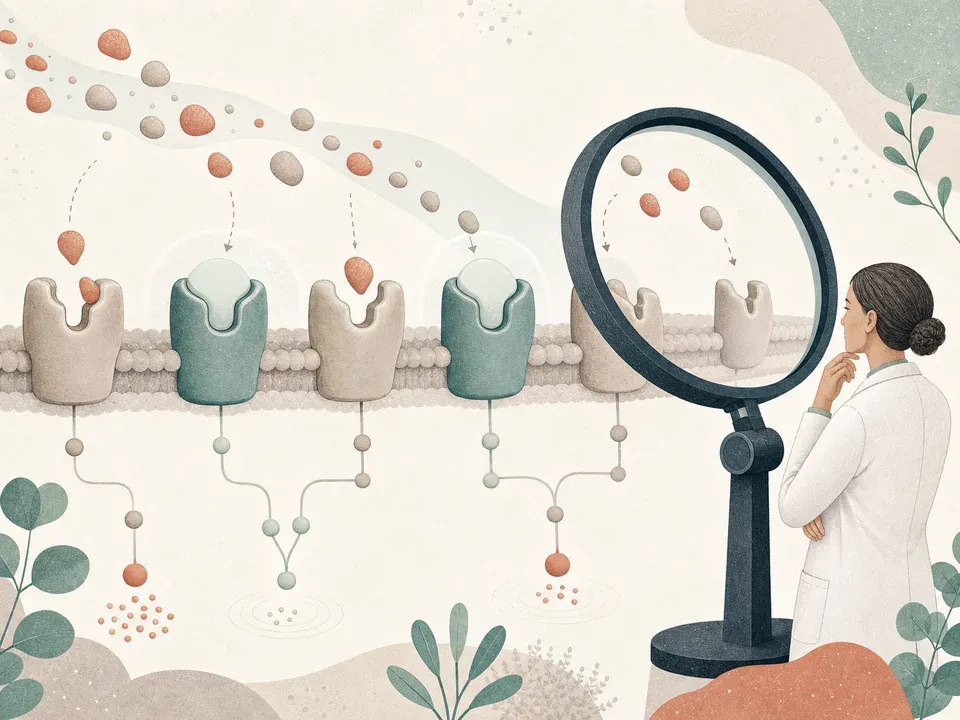
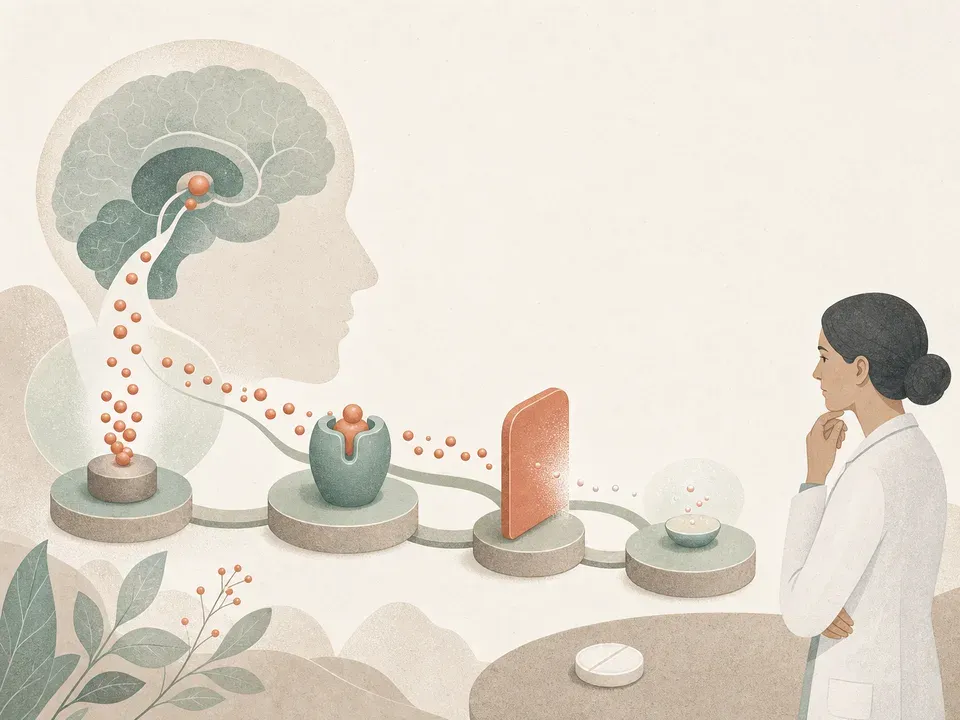
Alcohol affects several brain systems. Naltrexone blocks opioid-receptor signalling involved in part of the reward response, but it does not switch off alcohol's other effects. For some people, drinking becomes less compelling or heavy-drinking episodes become less frequent. That is a treatment possibility, not a guaranteed feeling. The evidence does not support a fixed timeline in which the brain simply ‘unlearns’ alcohol reward for everyone.
Different studies can all be accurate while measuring different things.
Avoiding all alcohol, reducing heavy-drinking days, preventing opioid relapse, and staying in treatment are not the same outcome.
A daily tablet and a monthly injection create different adherence and appointment demands.
Follow-up, counselling, housing, mental health, pain care, and overdose support can change what happens around the medicine.
The US oral label describes controlled heroin-challenge results over roughly 24 hours after 50 mg, with longer blockade after larger studied doses. Those experiments are not a personal timetable for opioid use or emergency pain treatment.
It may reduce craving or heavy-drinking outcomes for some people, but not everyone notices the same change. A follow-up plan should define what improvement would look like for that person.
Naltrexone can rapidly displace opioid effects from receptors. In someone who is physically dependent, that can trigger severe precipitated withdrawal.
They are different medicines with different benefits, risks, and initiation barriers. Naltrexone has no opioid effect, but the required opioid-free interval can make it harder to start and may not suit every person.
Mechanism, blockade experiments, contraindications, and overdose warnings.
Extended-release formulation, indications, administration, and safety warnings.
Compare naltrexone with acamprosate and disulfiram, or read the more detailed guide to targeted naltrexone before discussing an approach with a clinician.
Content and sources reviewed